ARCHAEOLOGY AND CULTURAL RESOURCE MANAGEMENT WORKFORCE DEVELOPMENT
Microcredential
ARCHAEOLOGY AND CULTURAL RESOURCE MANAGEMENT WORKFORCE DEVELOPMENT
ARCHAEOLOGY AND CULTURAL RESOURCE MANAGEMENT WORKFORCE DEVELOPMENT
Microcredential - Archaeology and Cultural Resource Management Workforce Development
Main Content Start
DESCRIPTION
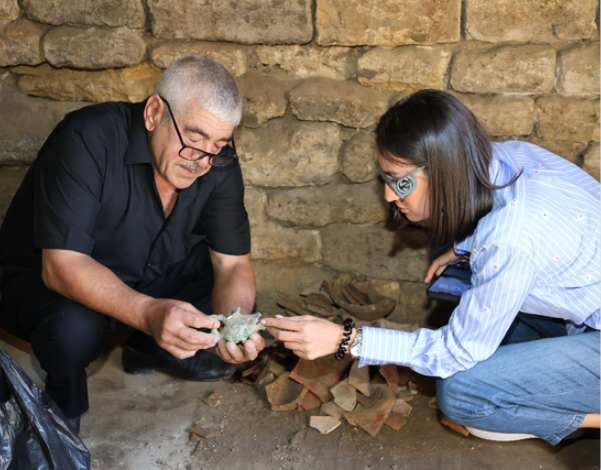
Archaeology is a discipline within anthropology that studies humans in the past, both prehistoric and historic. Academic archaeology and cultural resource management work towards learning about, recording, and preserving the past through different paths. In this course, students will learn the skills of archaeological fieldwork and systematic recording of features and artifacts, the terminology of archaeological work, and the technology and techniques of working in the field, as well as the laws and procedures they must follow. The course will help prepare students for employment as Archaeological Field Techs and give them skills useful in the academic side of archaeology. Students will have 3 weeks of lectures and training before undergoing 5 weeks of real-world skill application.
Instruction Method
NWACC online course: Lectures, readings, films, quizzes, tests, and training activities. Participation in activities is mandatory
Field training at Old Cahawba Archaeological Park: Instruction combines short lectures and hands-on tutorials, demonstrations, supervised field rotations, laboratory practice, collaborative analysis, group presentations, and reflective feedback.
Skills Acquired
- Phase I excavation
- Phase II excavation
- GIS (Geographic Information System) and GPS (Global Positioning System)
- Mapping
- Site and Shove Test Pit (STP) documentation
- Photography
- Artifact identification and care
Course Names and Codes
To earn this credential, the following courses must be successfully completed.
- XCRM - 1003 Cultural Resource Management Archelogical Field Work
Durable Skills Awarded
- Critical Thinking
- Collaboration and teamwork
- Oral Communication
- Creative problem-solving
- Intercultural fluency
- Resilience
- Empathy
- Self-directed learning
Prerequisites
None
Shortest Time to Completion
8 weeks — This is a combined course with 3 weeks of online lectures administered by NWACC and 5 weeks of field training at Old Cahawba Archaeological Park in Alabama.
Learning Outcomes
- Explain the purpose and sequence of Phase I survey and Phase II evaluation within a Cultural Resource Management (CRM) project.
- Describe how the National Historic Preservation Act, the National Environmental Policy Act, and relevant state preservation laws shape archaeological work.
- Carry out supervised pedestrian surveys, shovel testing, controlled excavation, and feature documentation using professional procedures.
- Maintain horizontal and vertical provenience, recognize stratigraphic relationships, and produce legible, complete field records.
- Apply introductory identification principles to ceramics, glass, metals, lithics, ecofacts, and other common archaeological materials.
- Clean, sort, catalog, label, and prepare artifacts and associated records for analysis and long-term curation.
- Use site forms, maps, field notes, photography, plan and profile drawings, and digital records to communicate archaeological information.
- Collect and evaluate spatial data while recognizing the differences among recreational GPS, tablet-based collection, and survey-grade Global Navigation Satellite System (GNSS).
- Demonstrate foundational competence in one specialized track and explain that method's capabilities, limitations, and ethical requirements.
- Work safely, ethically, and productively as a member of an archaeological field and laboratory crew.
- Interpret archaeological findings for public audiences without overstating the evidence or disclosing sensitive information.
- Identify multiple employment pathways and describe the professional expectations placed on entry-level CRM archaeologists.
Arechaeology and CRM Workforce Development Indeed Job Search
This search can include jobs that include additional training, educational, or work experience requirements.